LMS
LMS
Last updated on 11th May 2026| 11171

- Introduction of Workday For Fresher
- Understanding the Workday Architecture
- Core HCM and Talent Management
- Recruiting and Onboarding Processes
- Payroll and Time Tracking
- Reporting and Analytics Dashboards
- Workday Integrations and Security
- Building a Career as a Workday Consultant
- Conclusion
Introduction of Workday For Fresher
Breaking into the enterprise software space as a Workday For Fresher usually means choosing between older legacy systems or modern cloud platforms. Workday has completely taken over the human resources and finance software market because it is built purely for the cloud, meaning it is fast, mobile-friendly, and constantly updated without the need for massive IT overhauls. For freshers, learning Workday basics is an incredibly smart move because companies are aggressively migrating away from older on-premise systems to Workday, creating a massive surge in job openings. However, walking into an interview without understanding how Workday Training actually functions will instantly disqualify you. You do not need to be a hardcore coder to succeed here, but you absolutely must understand how business processes flow through the system. Below is a breakdown of the fundamental concepts that form the foundation of Workday, giving you the exact knowledge you need to start your cloud ERP journey on the right foot. Building clarity on these basics ensures you stand out in interviews, and focusing on practical workflows makes your preparation more effective. Over time, this foundation helps you adapt quickly to evolving enterprise needs and positions you as a valuable Workday For Fresher in the Workday ecosystem.
Understanding the Workday Architecture
Understanding the Workday architecture is the first step because it operates completely differently from older systems like SAP or Oracle. Instead of separating data into rigid silos, Workday uses a single unified database model where every piece of information is connected. If you update an employee’s address in one place, it automatically updates across payroll, benefits, and emergency contacts. Workday relies heavily on “Business Objects” and “Fields” to store this data, acting like building blocks that consultants configure instead of writing custom code. Another major architectural shift is that Workday Training relies purely on configuration, meaning you rarely write SQL queries or complex scripts to make changes. This object-oriented model makes the system incredibly flexible and much easier for freshers to learn because you are visually connecting data points rather than typing lines of backend code. Grasping this core concept early on saves you from trying to apply outdated legacy thinking to a modern cloud tool. Developing this understanding early accelerates your learning curve, and practicing with real scenarios ensures you retain the concepts effectively. Over time, this approach makes you confident in handling enterprise workflows and prepares you for advanced Workday modules seamlessly.
Ready to Pursue Your Workday Certificate? View The Workday Training Offered By ACTE Right Now!
Core HCM and Talent Management
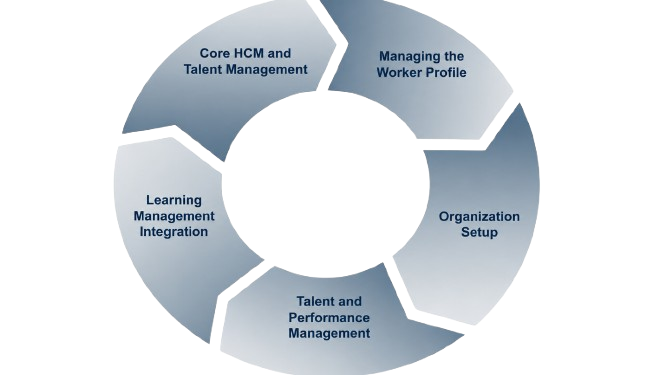
- Managing the Worker Profile: At the heart of Workday HCM is the worker profile, which acts as a single source of truth for every employee. It holds their personal details, job history, skills, and performance reviews. Mastering how this profile is structured helps you understand how HR teams view their entire workforce.
- Organization Setup: Before you can hire anyone, you have to build the company structure inside the system. Workday HCM Basics needs to know This means configuring supervisory organizations, cost centers, and department hierarchies. Learning this teaches you how large corporations map their internal reporting lines.
- Talent and Performance Management: Workday allows companies to set goals, conduct annual reviews, and track employee development all in one place. As a fresher, understanding this workflow shows you how HR moves beyond just administrative tasks into actively managing employee growth.
- Learning Management Integration: Workday has a built-in learning module where companies can assign training courses to employees. Understanding how this tracks compliance training or upskilling initiatives is a huge plus for freshers applying to consulting roles.
- The Concept of Effective Dating: This is Workday’s most unique feature. Every change you make in the system is tied to a specific date, past, present, or future. This allows companies to backpay someone or schedule a promotion for next month without breaking the current data, making historical tracking flawless.
Recruiting and Onboarding Processes
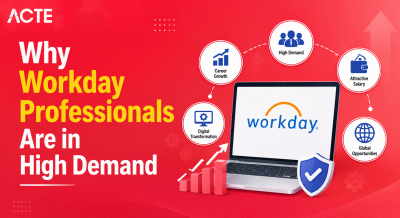
Workday Recruiting and Onboarding is where the system truly shines for job seekers and HR teams alike. The recruiting module handles the entire talent acquisition lifecycle, from posting a job on external boards like LinkedIn to screening resumes, interviewing candidates, and finally generating an offer letter. As a fresher learning the system, you will see how candidates flow through different “staffing models” as internal or external applicants. thats Why Workday professionals are high demand and Once a candidate accepts the offer, the system automatically triggers the onboarding process. Workday allows companies to create customized onboarding checklists, assign mentors, and automatically provision IT equipment like laptops before the employee’s first day. Learning this end-to-end flow is critical because it is one of the most highly utilized features in any enterprise. It proves to interviewers that you understand how a potential hire transforms into a fully active employee inside the software. Mastering this process builds confidence, and practicing with demo scenarios ensures you can explain workflows clearly. Over time, this knowledge positions you as a fresher who understands both HR logic and system functionality.
Payroll and Time Tracking
Managing payroll accurately is the most high-stakes task for any HR department, and Workday handles this with incredible precision. The time tracking module allows employees to log their hours, request time off, and managers to approve these requests directly from their mobile phones. For a fresher, understanding the “time entry” and “absence management” workflows is essential because these feed directly into the payroll calculation engine. Workday Payroll takes the gross pay, applies complex tax rules based on the employee’s location, deducts benefits like health insurance, and generates the final net pay and Becoming a workday consultant . Because payroll mistakes lead to massive legal issues and angry employees, companies heavily invest in consultants who know how to configure these calculation rules perfectly. Even if you do not want to be a payroll expert, knowing how time and pay interact in Workday makes you a much more well-rounded HCM consultant. Building clarity on these workflows strengthens your resume, and practicing payroll scenarios ensures you can handle real-world challenges. Over time, this expertise makes you a trusted fresher in HR technology projects.
Excited to Obtaining Your Workday Certificate? View The Workday Training Offered By ACTE Right Now!
Reporting and Analytics Dashboards
One of the biggest reasons companies choose Workday over competitors is its incredible built-in reporting and analytics capabilities. You do not need to be a data scientist to pull valuable insights from the system. Workday uses a tool called “Report Writer” that allows you to drag and drop fields to create custom reports in minutes. For freshers, learning the difference between simple custom reports, composite reports, and advanced calculated fields is a massive resume booster. Workday Training Teach basic reports, Workday offers pre-built analytics dashboards for executives. These dashboards show real-time data on employee turnover rates, diversity metrics, and payroll spending at a glance. Understanding how to pull this data and present it visually proves to employers that you do not just know how to enter data, but you actually know how to extract business value from it.
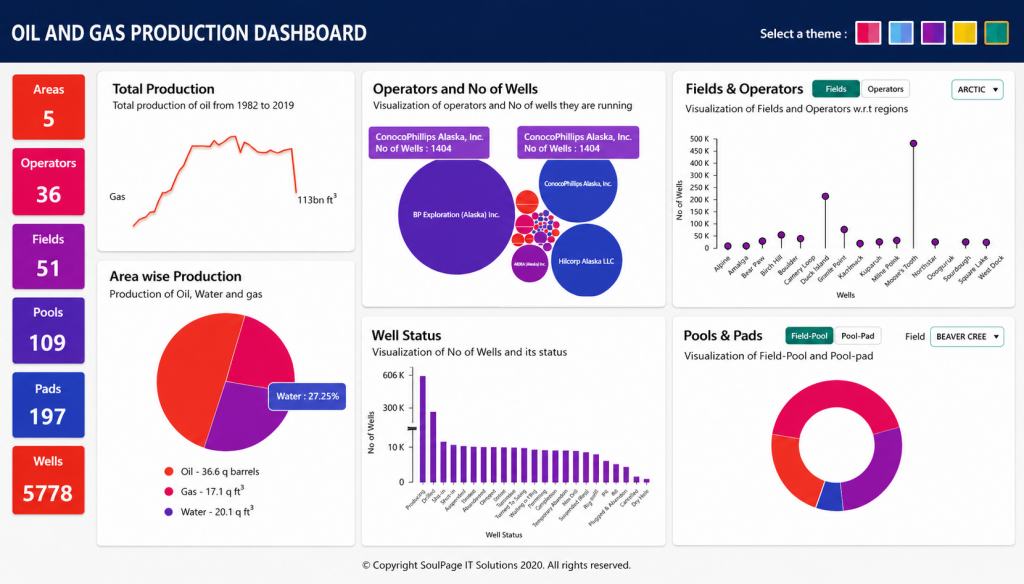
Practicing report creation builds analytical confidence, and learning dashboard usage makes you stand out in interviews. Over time, this skill ensures you are seen as a fresher who can deliver insights, not just manage data.
Are You Considering Pursuing a Workday Master’s Degree? Enroll For Workday Expert Masters Program Training Course Today!
Workday Integrations and Security
- The Concept of Workday Connectors: Workday rarely operates in a vacuum. Companies need it to talk to their benefits providers, third-party background check agencies, or even other software like Salesforce. Workday uses “Connectors” to push and pull data securely between these external systems without manual data entry.
- Understanding Enterprise Integration Architecture: Freshers should know about EIB (Enterprise Interface Builder) and custom API integrations. EIBs are usually used for bulk data loads, like uploading a spreadsheet of five hundred new employees at once. Knowing this shows you understand how enterprise data actually moves.
- Role-Based Security Model: Security in Workday is not just giving someone a username and password. It is highly granular, based on “Domain Security Policies.” You configure exactly which fields a specific user can see or edit. For example, a manager can see their team’s salaries, but not their own.
- Assigning Job Profiles and Roles: Every user in the system is assigned a specific role that dictates their permissions and Workday Jobs For Freshers. Learning how to navigate the security admin role and assign these permissions correctly is a highly paid niche within Workday consulting.
- Maintaining Data Privacy: Because Workday holds deeply personal employee data, understanding basic data privacy compliance is mandatory. Even as a fresher, knowing that the system is designed to mask sensitive data like social security numbers from unauthorized eyes shows maturity and business awareness.
Want to Learn About Workday? Explore Our Workday Interview Questions and Answers Featuring the Most Frequently Asked Questions in Job Interviews.
Building a Career as a Workday Consultant
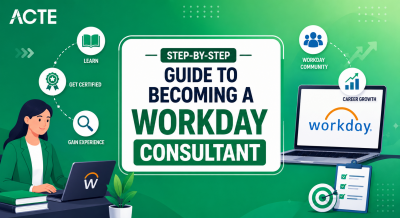
Building a career as a consultant is one of the most lucrative paths for Workday For Fresher in the cloud ERP space right now. Unlike older systems where it takes years to become relevant, Workday Training modern interface allows freshers to become functional consultants within six to eight months of dedicated training. Most Workday Consultant firms like Deloitte, Accenture, and PwC have dedicated Workday practices and they actively hire fresh graduates, putting them through intensive bootcamps before deploying them to client sites. As a functional consultant, your job is to sit down with a company’s HR team, understand their problems, and configure Workday to solve those problems. The career progression is also very fast. Within three to five years, you can move from a junior consultant to a lead consultant managing your own workstreams. Because the demand for Workday expertise is growing faster than the supply of trained professionals, freshers who get in now are perfectly positioned for rapid salary growth and leadership opportunities. Staying consistent with training ensures you reach consultant level quickly, and building strong client communication skills accelerates your career growth. Over time, this combination of technical and soft skills makes you a highly sought-after Workday professional.
Conclusion
Mastering the Workday for freshers is your ticket to entering a highly paid, fast-growing sector of the tech industry. The platform’s focus on cloud architecture, unified data, and seamless user experience makes it the absolute standard for modern HR and finance teams. By understanding core HCM concepts, the power of effective dating, and how data flows through reports and integrations, and Essential Workday Tools Used in HCM and Finance, you instantly separate yourself from candidates who only have a theoretical understanding of software. You do not need a master’s degree or ten years of IT experience to get started; you just need a solid grasp of business processes and the willingness to learn how Workday configures those processes. Pick a specific module like Recruiting or Core HCM, get hands-on practice, and start applying to consulting firms. The Workday wave is happening right now, and there is plenty of room for freshers who are ready to ride it. Staying proactive with continuous learning ensures you remain competitive, and committing to one module builds deep expertise that recruiters value. Over time, this strategy transforms you from a fresher into a confident consultant with strong career prospects.